Source tissue box for Office, Hotel, and Home Use
Find 30 verified listings for tissue box products featuring round and rectangular designs. Buyers can compare customization options, packing styles, and dimensions from suppliers in China to meet office, hotel, and home needs.
Key considerations
Products List


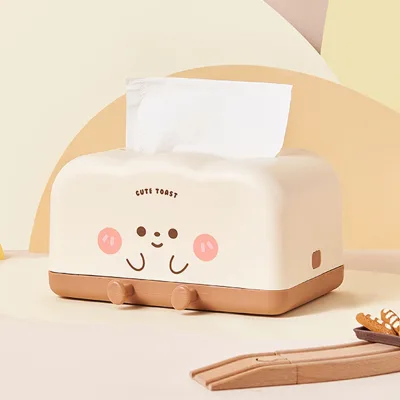


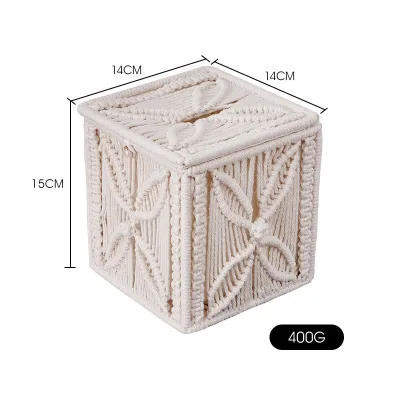


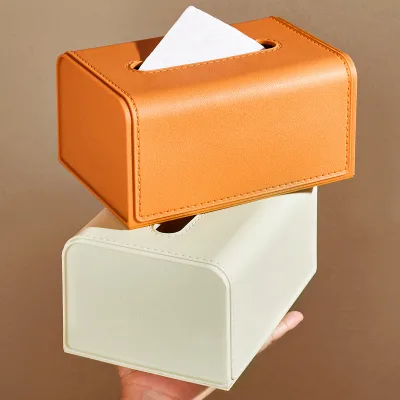


Comprehensive Sourcing Guide
Strategic Sourcing Guide for Tissue Box Procurement
Navigating the global market for tissue boxes requires a disciplined approach that balances aesthetic customization with rigorous functional specifications. The supply chain for these essential household and commercial items is diverse, ranging from simple disposable paper products to complex, branded packaging solutions. Buyers must understand that "tissue box" is not a singular product definition but a category encompassing various materials, dimensions, and intended use cases. This guide outlines the critical factors for evaluating suppliers and selecting products that align with specific procurement needs, relying strictly on observable product attributes and verified market data.
Technical Specifications and Material Composition
The foundation of any successful tissue box procurement lies in the precise definition of technical specifications. The market presents a wide array of material compositions, each dictating the product's durability, texture, and end-use suitability. Analysis of available inventory reveals distinct material profiles. Some products are constructed from Leather, offering a premium, durable finish suitable for high-end retail or hospitality environments. In contrast, a significant portion of the market focuses on Virgin Wood Pulp, which is standard for disposable tissue products. These pulp-based items often feature a 2 Ply or 1 Layer construction, directly influencing the absorbency and strength of the tissue.
Dimensions are equally critical and vary significantly based on the intended application. Observed product standards indicate a lack of universal sizing, with specific models adhering to precise measurements. For instance, certain rectangular units are standardized at 22139cm, while others measure 25.511.57cm. A specific model, identified by the reference 2609031631, is associated with a Rectangle shape, whereas another model, Box Tissue-028J, is noted for a Round shape. Buyers must verify these dimensions against their existing dispensers or storage requirements. The dimensional tolerance for these items is typically observed to be <±1cm, a margin that must be accounted for in inventory planning. Furthermore, the Paper Net Content for disposable variants is generally listed between 50g~100g/PCS, a metric that affects both the perceived value and the shipping weight of the final parcel.
Customization Capabilities and Design Flexibility
One of the most compelling aspects of sourcing tissue boxes is the high degree of customization available across the supply chain. The attribute Customization: Available is prevalent, allowing buyers to tailor products to specific brand identities or functional requirements. This flexibility extends to the Design, which is explicitly noted as Customizable in many listings. Suppliers offer options ranging from Modern simplicity styles to more intricate patterns, although a significant number of standard offerings come Without Pattern to maintain a clean, versatile aesthetic.
The production process plays a vital role in enabling these customizations. Many manufacturers utilize a Handmade/Other process, which allows for greater attention to detail and unique finishing touches compared to fully automated lines. This is particularly relevant for products requiring specific technics such as a Glossy finish. The prod_packing attribute also offers significant variance; options include Each Packed in a Polybag, Carton, Gift Box, or Customized Package. For large-scale orders, Carton/Palletizing is a standard requirement to ensure efficient logistics. The Box-packed quantity can vary, with specific examples showing 48 units per box, while other configurations list 120boxes/CTN. Buyers should explicitly confirm the prod_standard for their specific order, as some suppliers list this as customized, while others provide fixed dimensions like 18.5139cm.
Compliance, Certification, and Origin Verification
When evaluating the compliance landscape for tissue boxes, buyers must exercise caution regarding certification claims. While FSC (Forest Stewardship Council) certification is a recognized standard in the industry, it appears in background data with low confidence and should not be assumed as a guarantee for any specific listing without direct verification from the supplier. The primary compliance metric for many products is the adherence to specific prod_standard dimensions or customized requirements agreed upon during the order process.
Geographic origin is a critical factor in assessing supply chain transparency and potential logistics costs. The data indicates a concentration of manufacturing in China, with specific production hubs identified in Hebei, Quanzhou, Fujian, and Taizhou. These locations often influence the place of origin listed on product specifications. For example, products originating from Quanzhou, Fujian may have different logistical profiles compared to those from Hebei. Buyers should verify the prod_origin on all purchase orders to ensure alignment with trade agreements or internal sourcing policies. Additionally, the Weight of cross-border parcels is a tangible metric for logistics planning; observed weights for specific units are approximately 0.3.kg, which helps in calculating freight costs and container utilization.
Cost Drivers and Pricing Dynamics
Understanding the cost structure of tissue boxes requires an analysis of the interplay between material, customization, and volume. The observed listed price range in the market spans from 0.01 to 100 USD, a wide spectrum that reflects the diversity of products from basic disposable units to premium leather or highly customized gift boxes. The MOQ (Minimum Order Quantity) is another significant cost driver, with observed ranges extending from 10 to 90000 units. Lower MOQs, such as 10, are typically associated with sample orders or highly customized designs, whereas the upper end of the range suggests bulk manufacturing capabilities for standard items.
Several factors influence the final price point. The Material choice is paramount; Leather products command a higher price than Virgin Wood Pulp equivalents. The Process, particularly if Handmade, adds labor costs that are reflected in the unit price. Furthermore, the prod_packing complexity affects costs; a Gift Box or Customized Package will be more expensive than a simple Polybag or Carton solution. The Layer count, whether 1 Layer or 2 Ply, also impacts the raw material usage and, consequently, the price. Buyers should note that the Application Scenarios, such as Office & Hotel, Home, Travel, Sport, may dictate the required quality level, thereby influencing the cost. For instance, Office & Hotel applications often require higher durability and aesthetic standards, potentially increasing the unit cost compared to general Disposable travel options.
Typical Applications and Usage Scenarios
The versatility of tissue boxes allows them to serve a broad range of applications, from domestic use to commercial hospitality. The Application attribute highlights specific use cases including Office & Hotel, Home, Travel, and Sport. For Office & Hotel environments, the Style often leans towards Modern simplicity or Box Tissue designs that integrate seamlessly with interior decor. The Color is predominantly White, providing a neutral and hygienic appearance suitable for public spaces.
In the Travel and Sport sectors, portability is a key requirement. Attributes such as Portable and specific dimensions like 130*180 2ply20pulls40sheets indicate products designed for on-the-go use. The Core attribute, often listed as Without Core, suggests a design that maximizes tissue capacity within a compact footprint. For Home use, the Load capacity of the box, noted as ≤5kg in some contexts, ensures the structure can support the weight of the tissue roll and the box itself without deformation. The Flavor attribute, typically Without Flavor, is standard for general hygiene products, ensuring the tissue does not interfere with the user's experience. Understanding these specific scenarios helps buyers select the right product variant, ensuring that the Design and Shape (Round or Rectangle) match the functional needs of the end-user.
Supplier Evaluation and Quality Control Protocols
Evaluating suppliers for tissue box procurement requires a focus on consistency, transparency, and adherence to stated specifications. Buyers should prioritize suppliers who provide clear documentation of prod_model numbers, such as 24101656, 24101658, or YS2008011, as these identifiers are crucial for maintaining order accuracy and tracking production batches. The Single package size of 20X15X15 cm and the specification of 1914.810.7cm serve as benchmarks for verifying that the delivered goods match the ordered specifications.
Quality control should begin with a review of the Process and technics. For products claiming a Glossy finish or Handmade construction, buyers should request samples to verify the consistency of the finish and the structural integrity of the box. The prod_packing method must be rigorously inspected to ensure that items are protected during transit, whether through Polybag wrapping or Carton stacking. For large orders, the Carton/Palletizing standard must be confirmed to prevent damage during shipping. Additionally, the dimensional tolerance of <±1cm should be tested on a random sample basis to ensure that the boxes fit the intended dispensers or packaging lines. Buyers should also verify the Brand Name, such as GREENSIDE, if branding is a requirement, ensuring that the supplier has the authorization to use such trademarks.
Long-Term Procurement Considerations
Sourcing tissue boxes is not merely a transactional activity but a strategic decision that impacts long-term supply chain resilience. The Customizable nature of the prod_standard and prod_model allows for scalability, but it also requires careful management of specifications over time. As business needs evolve, the ability to adjust the Layer count, Material, or Design becomes essential. Buyers should establish a relationship with suppliers who can accommodate changes in prod_packing requirements, such as shifting from individual Polybag packing to bulk Carton solutions as order volumes increase.
Sustainability and supply chain transparency are increasingly important. While FSC certification is a potential indicator of responsible sourcing, buyers must verify this directly rather than relying on general market assumptions. The place of origin in regions like Hebei or Fujian should be monitored for any geopolitical or logistical changes that could affect lead times. Furthermore, the Weight of cross-border parcels and dimensional tolerance data should be used to optimize shipping strategies, potentially reducing costs by consolidating shipments or adjusting packaging density. By maintaining a detailed record of prod_model numbers and specifications, buyers can ensure continuity and quality in their long-term procurement strategy, avoiding the pitfalls of inconsistent product quality or supply disruptions.
FAQs
What materials are used for tissue boxes?
Tissue boxes are constructed from Leather or Virgin Wood Pulp. Leather offers a premium finish for high-end environments, while Virgin Wood Pulp is standard for disposable products with 1 or 2 ply layers.
Can I customize the design and packaging?
Customization is available for design and packaging. Buyers can request customized packages, gift boxes, or specific dimensions like 22*13*9cm, with options for modern simplicity styles or glossy finishes.
What are the standard dimensions for rectangular boxes?
Rectangular units often adhere to standards like 22*13*9cm or 25.5*11.5*7cm. The dimensional tolerance is typically less than plus or minus 1cm, ensuring fit for specific dispensers.
Where are these products manufactured?
Products originate from China, with specific hubs in Hebei, Quanzhou, Fujian, and Taizhou. The place of origin influences logistics, with cross-border parcel weights observed around 0.3kg.
What is the minimum order quantity range?
The minimum order quantity ranges from 10 to 90000 units. Lower MOQs often apply to samples or custom designs, while higher volumes support bulk manufacturing of standard items.
How are the products packed for shipping?
Packing options include polybags, cartons, gift boxes, or customized packages. Large orders may require carton palletizing, with specific configurations like 120 boxes per carton or 48 units per box.